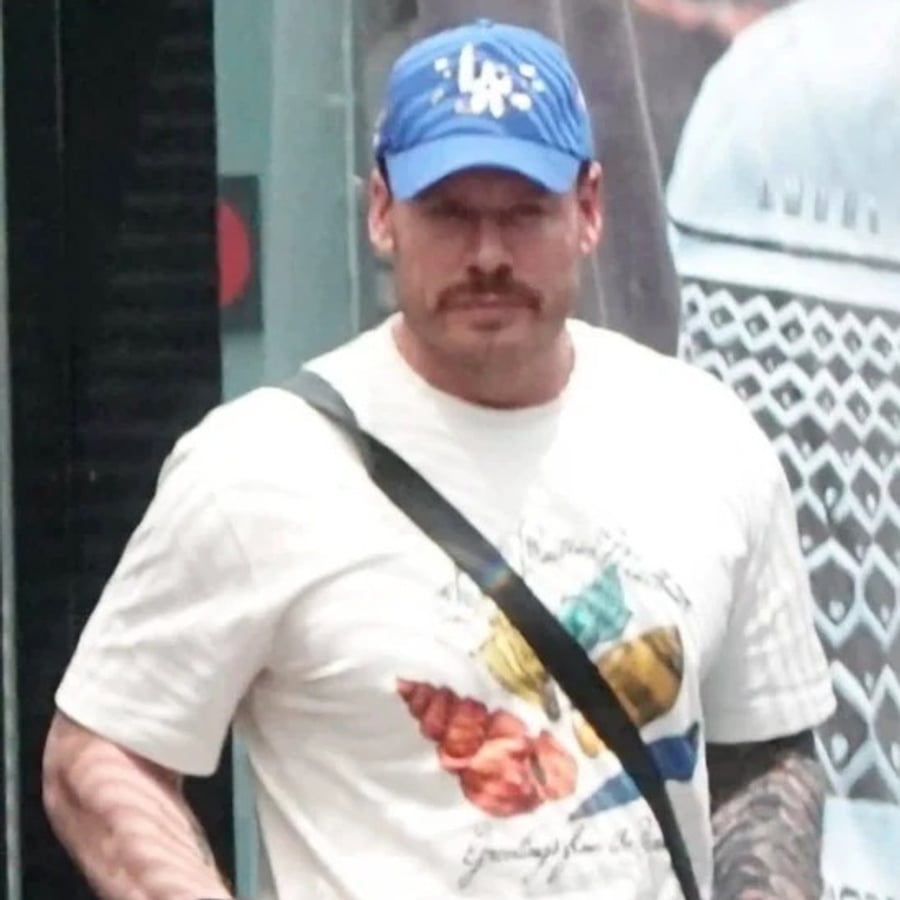

The Wedding Criminal Enterprise: Inside the Narcotics Empire of Ryan James Wedding
An Olympic snowboarder turned fugitive drug lord, running a billion-dollar Sinaloa-backed cocaine pipeline from Mexico — and a “culture of fear” that left four dead in Ontario and one in Colombia. This is an exhaustive investigative report on one of North America’s most violent narcotics syndicates.
The case of Ryan James Wedding represents a singular anomaly in transnational organized crime: the metamorphosis of an elite Olympic athlete into a “Tier 1” drug kingpin and alleged mass murderer. The FBI, in concert with the RCMP and international partners, has designated the Wedding Criminal Enterprise (Wedding DTO) as one of the most prolific and violent narcotics syndicates operating in North America.
Operating from the protective enclave of the Sinaloa Cartel in Mexico, Wedding — known by the aliases “El Jefe,” “Giant,” and “Public Enemy” — is accused of orchestrating a billion-dollar annual supply chain that floods the United States and Canada with Colombian cocaine. The organization is distinguished not merely by its volume, estimated at 60 metric tons annually, but by its ruthless enforcement: a “culture of fear” using contract killers to eliminate rivals, debtors, and witnesses. The investigation, codenamed Operation Giant Slalom, has led to the indictment of 16 individuals and a $15 million reward for Wedding’s capture.
The Rise and Fall of Ryan James Wedding
Born in Thunder Bay, Ontario and raised in Coquitlam, British Columbia, Wedding displayed an early aptitude for winter sports — a career that culminated in his selection for the Canadian National Team at the 2002 Winter Olympics in Salt Lake City, where he competed in the Parallel Giant Slalom and finished 24th.
The Olympic appearance marked the zenith of his legitimate career. By 2006 he had attracted the attention of Canadian law enforcement, when the RCMP raided a Maple Ridge, B.C. property known as “Eighteen Carrot Farms” and discovered a massive cannabis operation. Insufficient evidence precluded charges — a close call that perhaps emboldened his future risks.
Organizational Structure
The Wedding Criminal Enterprise was not a loose confederation of smugglers but a highly structured vertical hierarchy designed to insulate leadership while maximizing throughput — mirroring a multinational logistics corporation, with distinct departments for procurement, transportation, finance, and enforcement.
Ryan James Wedding (“El Jefe”) — Supreme leader. Responsible for strategic alliances with Colombian suppliers and the Sinaloa Cartel, retaining ultimate authority over major shipments and lethal enforcement orders.
Andrew Clark (“The Dictator”) — Second-in-command, 34, a Canadian also residing in Mexico. The operational CEO to Wedding’s Chairman, tasked with day-to-day logistics and coordinating the contract killings ordered by the enterprise.
Hardeep Ratte (45) — Primary organizer of the Canadian transportation network; managed the fleet of semi-trucks and drivers.
Gurpreet Singh (30) — Coordinated cross-border shipment logistics, bridging stash houses and drivers.
Rakhim Ibragimov (“The Russian”) & Gennadii Bilonog — Dispatchers who received bulk US shipments and assigned them to truckers for northward transport.
Deepak Balwant Paradkar (“The Cocaine Lawyer”) — A 62-year-old criminal defence attorney from Thornhill, Ontario, accused of acting as a consigliere: passing messages, monitoring co-defendants to ensure silence, and allegedly advising Wedding that murdering a witness would “dismiss the case.”
Gursewak Singh Bal (“The Crime Blogger”) — Operator of a “gangland news” website, accused of doxing a cooperating witness by posting their photo online to facilitate their location and murder.
The “California Pipeline”
The Wedding DTO operated a “superhighway” for cocaine, leveraging NAFTA-era trucking infrastructure to move an estimated 60 tons of product annually. Cocaine was sourced directly from production centres in Colombia — using boats and planes to move hundreds of kilograms at a time to Mexico — bypassing middle-men through wholesale purchasing power.
Southern California served as the primary transshipment hub, with a network of stash houses storing bulk cocaine from Mexico before it was broken into truck-sized loads. The scale was staggering: dispatcher Rakhim Ibragimov was arrested in April 2024 while transferring 375 kilograms of cocaine to his vehicle. In another instance, a courier delivered 293 kg to dispatcher Gennadii Bilonog, texting Wedding: “Ready boss delivered the order of 293.”
Commercial semi-trucks with hidden “trap” compartments ran the I-5 and I-15 corridors, blending with legitimate freight and crossing into Canada at major ports like the Blue Water Bridge (Michigan to Ontario). In August 2024, authorities stopped truckers Ranjit Singh Rowal (65) and Iqbal Singh Virk (57) at that bridge, finding 95 kg of cocaine and 20 kg of heroin in a secret trailer compartment. Rowal pleaded guilty and was sentenced to over six years. The drivers’ ages suggest the DTO recruited older, clean-record individuals to lower suspicion.
To move a billion-dollar enterprise’s liquidity, the DTO shifted from bulk cash to digital finance. Indictments allege Wedding and Clark used virtual currency wallets to transfer approximately $250 million between April and September 2024 alone. In a single day, investigators seized more than $3 million from one crypto wallet controlled by the group.
The “Culture of Fear”
While the logistics were corporate, the enforcement was barbaric. The Wedding DTO is accused of fostering a culture of fear through systematic violence — linked to four murders in Ontario and one in Colombia.
Gunmen attacked a rental home in Caledon, Ontario, killing Jagtar Singh Sidhu (57) and his wife Harbhajan Kaur Sidhu (55). Their daughter was shot 13 times but survived. Investigators determined it was a botched retaliation over a stolen drug shipment — and the OPP stated unequivocally that the Sidhu family was “completely innocent,” visitors to Canada with no involvement in the drug trade.
Randy Fader, 29, was gunned down outside his home. Court documents reveal a chilling Threema chat between Andrew Clark and the alleged shooter, Malik Cunningham (23, alias “MrPerfect”), who asked for “the easiest one first.” Clark’s reply was explicit: “drive over niagra blow this guys top off.”
Mohammed Zafar, 39, was executed over a drug debt owed to the organization — underscoring the DTO’s simple policy for debtors: pay up or face death. In a related instance, Wedding allegedly threatened to kill another debtor’s mother if a cocaine debt went unpaid.
Jonathan Acebedo-Garcia — a Montreal-born former prison-mate of Wedding turned FBI cooperator — was tracked to Medellín and shot multiple times in the head while eating at a restaurant. The organization allegedly used crime blogger Gursewak Singh Bal to dox him online first. Wedding then reportedly had hitman Atna Ohna paid $150,000 CAD, 30 kg of cocaine, and a bejewelled necklace for the assassination.
Operation Giant Slalom: The Takedown
Dismantling the network required a massive multi-year international effort — a nod to Wedding’s Olympic past — joining the FBI, DEA, and Homeland Security in the US; the RCMP, OPP, Peel, Niagara, and Toronto police in Canada; and Mexican and Colombian federal authorities.
October 2024: A 16-count superseding indictment charges Wedding, Clark, and 14 others under the “Kingpin Statute” (Continuing Criminal Enterprise), carrying a mandatory life sentence.
November 2025: A separate murder indictment charges 10 defendants — including Paradkar and Bal — over the Acebedo-Garcia killing.
Andrew Clark was arrested in Mexico on October 8, 2024 and extradited, depriving Wedding of his operational commander. Canadian sweeps netted Ratte, Bal, Cunningham, and Paradkar; US arrests took Ibragimov and other logistics personnel.
Ryan James Wedding remains a fugitive. The US Department of State has offered a $15 million reward for information leading to his arrest — placing him in the highest tier of wanted global criminals, comparable to figures like Rafael Caro Quintero or Ismael “El Mayo” Zambada.
The Geopolitics of the Wedding DTO
Wedding is part of a growing trend of Canadian criminals establishing permanent bases in Mexico — a “Little Canada” of organized crime operating within Sinaloa infrastructure, managing North American logistics remotely while enjoying cartel impunity. The symbiosis is mutual: Wedding gives the cartel a high-volume distribution network into the lucrative Canadian market, where cocaine prices far exceed US rates; in return, the cartel provides supply and physical protection, likely insulated by the corruption of local officials.
Yet the Caledon murders reveal a degradation in the “professionalism” of the enterprise’s violence. While the logistics ran with corporate efficiency, the enforcement arm displayed reckless incompetence — imperfect intelligence led to the slaughter of innocent civilians, which ultimately drew the intense heat that accelerated the network’s dismantling.
Key Figures in the Enterprise
Ryan James Wedding — Principal Leader (“El Jefe”) | Fugitive | CCE, murder, trafficking
Andrew Clark — Second-in-Command (“The Dictator”) | Arrested, extradited | Coordinating murders, logistics
Deepak Paradkar — Legal Advisor (“Cocaine Lawyer”) | Arrested | Witness tampering, counselling murder
Hardeep Ratte — Transportation Boss | Arrested | Managing the trucking fleet
Gursewak Singh Bal — Media / Intimidation | Arrested | Doxing witnesses via blog
Malik Cunningham — Enforcer (“MrPerfect”) | Arrested | Murder of Randy Fader
Atna Ohna — Enforcer | Arrested | Murder of Acebedo-Garcia
Rakhim Ibragimov — Dispatcher (“The Russian”) | Arrested | Moving bulk cocaine
Gennadii Bilonog — Dispatcher | Fugitive | Logistics and distribution
Ranjit S. Rowal — Truck Driver | Sentenced (6 years) | Transporting 95 kg cocaine
Jonathan Acebedo-Garcia — Former Associate (“Victim A”) | Deceased | Cooperating with FBI
This investigative report is based on court documents, law enforcement statements, and public records as of December 2025. All individuals are presumed innocent until proven guilty in a court of law.
- US Department of Justice — Superseding indictment, United States v. Wedding et al. (October 2024)
- US Department of Justice — Murder indictment re: Acebedo-Garcia (November 2025)
- FBI Los Angeles Field Office — Operation Giant Slalom statements and $15M reward notice
- Ontario Provincial Police — Caledon homicide investigation statements (2023–2024)
- RCMP — Operation Harrington and federal policing records
- US Department of State — Narcotics Rewards Program listing for Ryan Wedding